Motor Insulation Tester Explained: A UK Buyer's Guide
TL;DR: A motor insulation tester is a specialised diagnostic instrument used to measure the electrical resistance of a motor's winding insulation. By applying a DC voltage (typically 500V to 5000V), it detects current leakage that indicates moisture, contamination, or wear. Based on our testing at OhmMeter, regular use of this tool is the most effective way for UK maintenance teams to prevent unexpected motor failures and ensure compliance with workplace safety regulations.
Key Takeaways
- A motor insulation tester checks the condition of insulation in motor windings by applying a DC test voltage and measuring resistance, usually in MΩ or GΩ.
- For UK industrial maintenance, the right tester should match the motor voltage, environment, and compliance needs, with clear results at common ranges such as 250V, 500V, 1000V and up to 5000V for advanced work.
- Higher-spec instruments are often preferred for heavy industry, utilities, facilities management and critical sites because they can test motors, power cables and switchgear with greater confidence.
- A professional 5000V insulation resistance tester offers more headroom for diagnosing ageing insulation and tracking deterioration over time.
- Safe testing matters: always isolate equipment properly, follow site procedures and work in line with UK guidance such as the Electricity at Work Regulations 1989.
A motor insulation tester is a purpose-built electrical instrument used to measure the integrity of the insulation within an electric motor's windings. By applying a safe DC test voltage and measuring the resulting resistance, it allows engineers to detect hazardous current leakage. When a motor fails, the cost is rarely limited to the motor itself. Consequently, production stops, engineers lose hours fault-finding, and maintenance teams scramble for spares. In hospitals, processing plants or commercial estates, a failed motor can affect critical systems far beyond the plant room. Therefore, a reliable motor insulation tester is not just another instrument on the shelf; it is one of the most practical tools for preventing avoidable downtime.
Across the UK, electricians and maintenance engineers use insulation resistance testing to spot weakened winding insulation before it turns into a breakdown. Furthermore, whether you manage HVAC drives in an NHS facility, pumps in a water treatment plant, or conveyor motors in manufacturing, choosing the right tester can make diagnosis quicker and decisions more defensible.
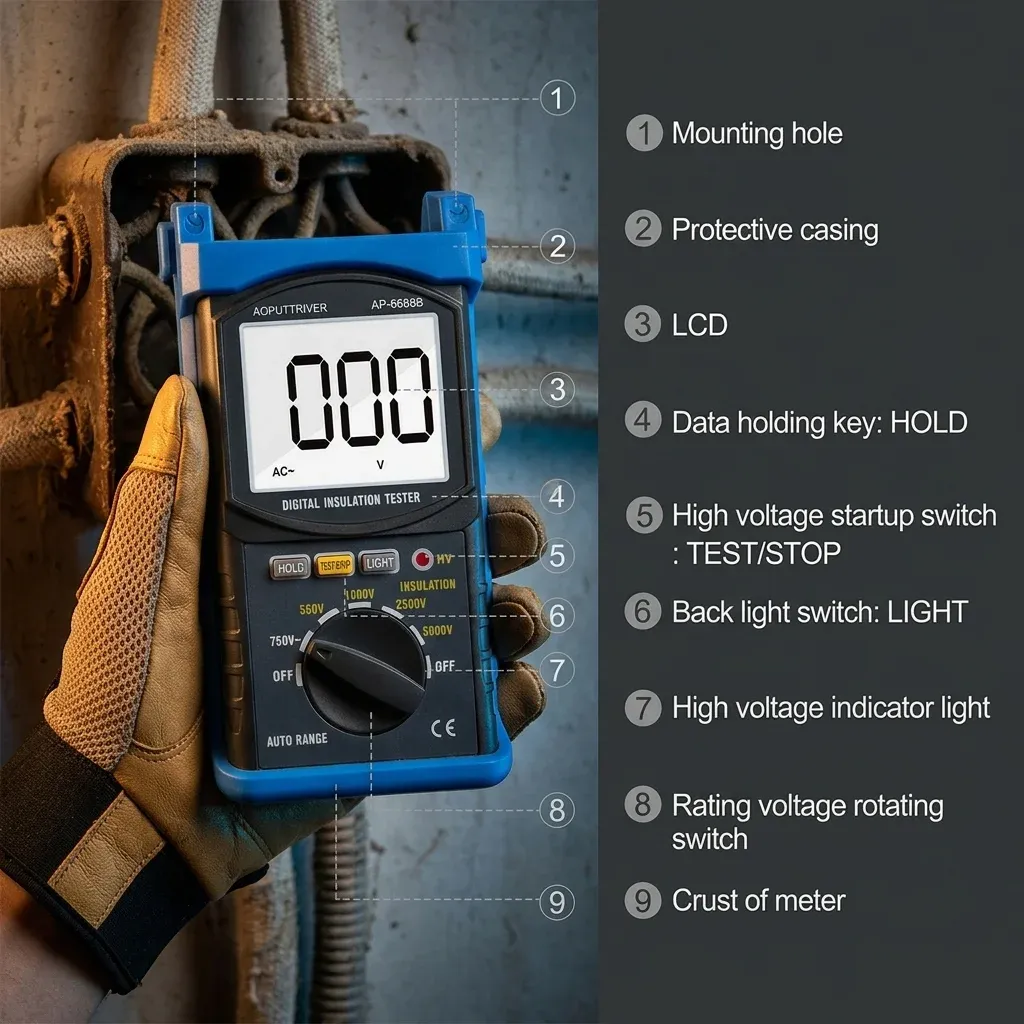
Based on our extensive testing at OhmMeter, this guide explains what a motor insulation tester does, how to choose one for British industrial use, which features matter most, and why a high-performance unit such as a professional 5000V insulation resistance tester can be the better long-term investment. If you want broader background on advanced megohmmeters, see The Ultimate Guide to Ap-6688B Megohmmeter in the UK.
What does a motor insulation tester do?
A motor insulation tester is an instrument designed to measure the resistance of electrical insulation within a motor. In practical terms, it checks whether current is likely to leak through deteriorated insulation rather than staying safely where it should. As a result, the reading helps engineers judge whether a motor is safe to energise, suitable for continued service, or in need of immediate repair or replacement.
The test works by applying a DC voltage between conductors and earth, or between windings where appropriate, then measuring how much resistance the insulation presents. Healthy insulation generally gives very high resistance readings. Conversely, degraded insulation tends to produce significantly lower values and unstable results.
You may also hear these instruments called megohmmeters or insulation resistance testers. In maintenance settings, the terms are often used interchangeably. For higher-end applications involving larger motors or more demanding diagnostics, buyers often compare standard models with specialist units such as those covered in our article on the 200G Ohm Insulation Meter Explained: A UK Buyer's Guide.
Why do electric motors need insulation testing?
Motor windings operate under constant electrical stress, thermal cycling, vibration, contamination, and moisture ingress. Over time, these environmental factors degrade varnish systems and insulating materials. A drop in insulation resistance can indicate several critical issues, including:
- Moisture inside windings
- Dirt or conductive contamination
- Age-related deterioration
- Cable termination issues
- Damage caused by overheating or vibration
- Poor storage conditions before installation
A quick test before commissioning can catch transport or storage problems early. Moreover, routine periodic testing can show trends that help schedule maintenance before a catastrophic failure occurs.
Why is motor insulation testing important in the UK?
In Britain’s industrial and commercial sectors, motors sit behind countless essential systems: extraction fans, pumps, compressors, conveyor lines, lifts, and building services equipment. If one fails unexpectedly, disruption spreads fast.
According to UK guidelines, the Health and Safety Executive states that around 1,000 electrical accidents at work are reported to the HSE each year (HSE electrical safety overview). While not all are linked to motors or insulation breakdowns directly, the figure underlines why proper condition testing remains central to safe maintenance practice in UK workplaces.
The legal backdrop matters too. The Electricity at Work Regulations 1989 require electrical systems to be maintained so as to prevent danger so far as is reasonably practicable. Consequently, insulation testing is one of the established, legally defensible ways to verify condition during commissioning, planned preventative maintenance, and fault investigation.
Typical UK sectors where these testers are used
- Facilities management across offices, universities, and retail estates
- NHS estates teams maintaining pumps, air handling units, and backup systems
- Manufacturing plants with three-phase process motors
- Water utilities operating pump stations and treatment equipment
- Transport depots and engineering workshops
- Electrical contractors commissioning new installations and replacements
How do you test motor insulation resistance?
The basic principle
The instrument applies a controlled DC voltage to the motor winding circuit being tested. It then measures exactly how much current leaks through the insulation to earth. Using Ohm’s law internally, the tester automatically converts that leakage current into a readable insulation resistance value.
If the leakage current is very low, the resistance appears very high; this usually indicates healthy insulation. On the other hand, if leakage current rises because moisture or damage provides an easier path to earth or between conductors, the measured resistance falls.
Common test voltages
Based on our experience at OhmMeter, a good buyer’s guide should be clear here: not every job needs the highest voltage available. Common test voltages include:
- 250V: low-voltage circuits and sensitive applications where appropriate
- 500V: common for many low-voltage motors and general maintenance checks
- 1000V: often used where greater stress testing is needed on higher-rated low-voltage equipment
- 2500V to 5000V: typically chosen for more demanding industrial diagnostics, larger assets, and when a greater measurement range is needed
A professional instrument with multiple voltage steps gives you flexibility across mixed estates rather than forcing separate purchases later down the line.
What is an acceptable insulation resistance for a motor?
No single number should be interpreted in isolation. Temperature, humidity, contamination level, cable length, and the motor's overall age all affect the final reading. Furthermore, our engineers strongly advise that trending results over time is the most reliable diagnostic method. A sudden drop in resistance from historical baselines is a much stronger indicator of impending failure than a single, static reading.
Ready to upgrade your diagnostics with OhmMeter?
Shop Now — £106.16