Insulation Test Voltage Selection Guide Uk
Direct answer: choose insulation test voltage from the asset's rating, manufacturer instructions and site procedure. Do not start at 5000V because the meter can deliver it. For mixed UK plant, 500V and 1000V cover many low-voltage installation checks, while 2500V and 5000V belong to higher-voltage motors, long power cables, switchgear procedures or site standards that call for them.
The common mistake is treating the dial as a ladder of quality. Higher voltage is not a better test if the asset is not designed for it. It can damage electronics, surge devices, drives and borderline insulation. The practical aim is enough DC stress to reveal leakage while staying inside the written limits for that asset.
Low-Voltage Installation Bands
For UK installation work, BS 7671-style guidance is a useful starting point but not the whole industrial story. Elec-Mate's BS 7671 insulation resistance guide summarises common bands: SELV/PELV circuits use lower test voltage, standard circuits up to and including 500V commonly use 500V DC, and circuits above 500V use higher test voltage guidance. That does not make the same limits universal for medium-voltage motors or switchgear.
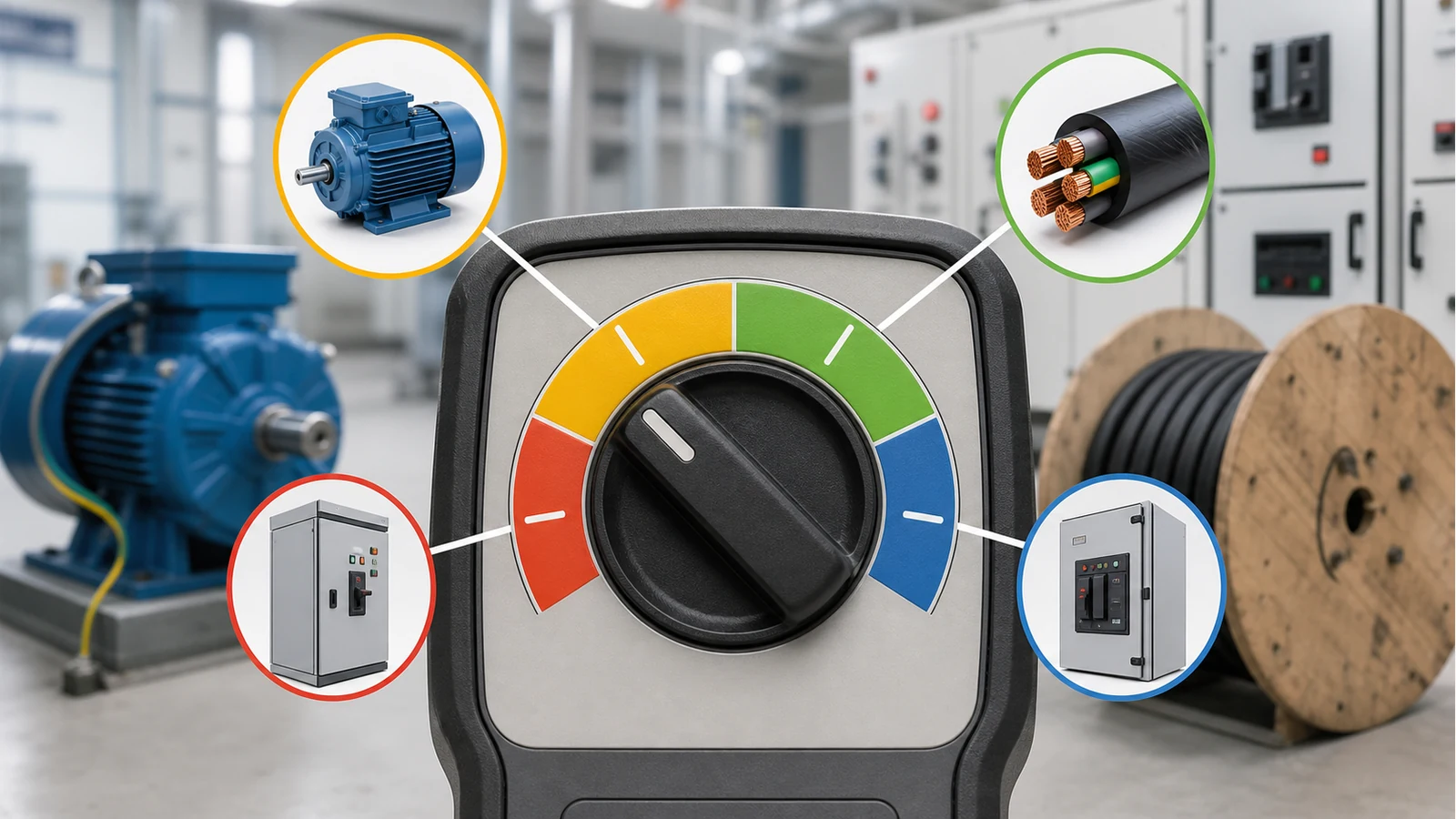
Four-Voltage Decision Map
| Meter position | Typical first question | Use with caution |
|---|---|---|
| 500V | Is this a standard low-voltage circuit or low-voltage motor check allowed by the procedure? | Disconnect sensitive electronics and follow manufacturer instructions. |
| 1000V | Does the asset rating or site method call for more than the standard 500V installation check? | Do not apply it to connected drives, control boards or SPDs without a method. |
| 2500V | Is this a higher-voltage motor or cable where the written procedure specifies this range? | Record temperature, humidity, duration and discharge. |
| 5000V | Is the asset and method explicitly suitable for 5kV DC IR testing? | Use barriers, competence and full discharge discipline; do not use as a default. |
Industrial Practice Is Broader
Motors, switchgear and power cables are not all governed by domestic installation tables. A practical IEC-oriented overview from InsulationTesting.com on IEC insulation testing standards separates installation, rotating machine and switchgear contexts, which is the right mental model for a mixed plant room. The asset type changes the question from "what does the tester do?" to "what does this job pack require?"
If your site is a regulated network, a DNO contractor or a facility with company pressure-test tables, escalate to the approved procedure. A handheld 5kV IR meter is not a substitute for every pressure test or commissioning requirement.
When 5kV Is Useful
5kV becomes useful when the equipment rating, cable length, insulation system and procedure justify it. Examples include some higher-voltage motor windings, long power cable checks and switchgear insulation work where the method states the test voltage. It is also useful when a team wants headroom from a single shared instrument for mixed plant assets.
5kV is the wrong first choice for unknown low-voltage electronics, VSD-connected motors that have not been isolated from the drive, small control circuits, wet or contaminated windings that need assessment before stress, and any asset without a written voltage selection rule.
Record What Makes The Reading Comparable
A good IR result is not just a number. Record asset ID, test voltage, connection points, duration, temperature, humidity or damp condition, instrument ID, and discharge confirmation. The value of a 200Gohm upper range is trend visibility: it can show a dry winding or cable moving over time, but only if the method stays consistent.
Before buying a four-range meter, read the related calibration certificate guide. If a selectable 500V/1000V/2500V/5000V meter fits your internal method and you do not need automated report export, the AP-6688B product details are a relevant check, not a replacement for the method.
For switchgear-specific controls, use the switchgear IR checklist.